Blog · C5
ISO/IEC 17025 readiness: turning calibration logs and lab conditions into audit evidence
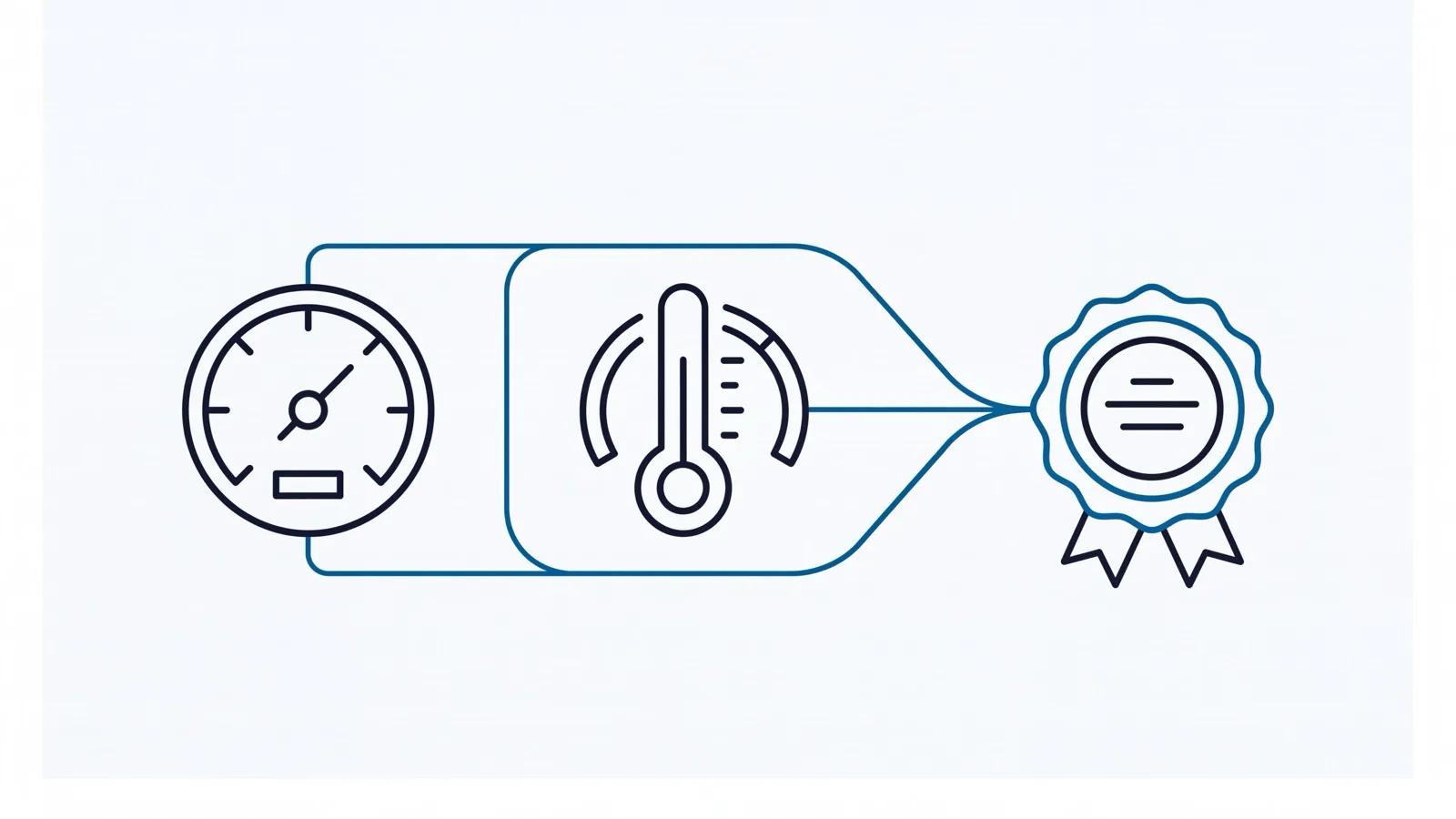
ISO/IEC 17025 readiness means being able to produce, on demand, calibration status and lab-condition evidence for every instrument in scope — not compile it after an audit is announced. Over 114,600 laboratories are accredited under the ILAC Mutual Recognition Arrangement worldwide (ILAC, March 2025), and the standard itself was refreshed this year: ISO published ISO/IEC 17025:2025 on 27 September 2025, replacing the 2017 edition (ISO, 2025).
Where readiness breaks down in practice
Two categories of evidence drive most accreditation-audit pain, and both tend to live on paper:
- Calibration status per instrument. Inventory number, room, department, last calibration date, next calibration date — tracked correctly means every instrument's due date is known before it's needed; tracked in a spreadsheet updated irregularly means an auditor finds an overdue instrument still in active use.
- Lab conditions. Temperature and humidity affect measurement validity for many test methods. Logged by hand on paper sheets, this evidence is exactly the kind that goes missing, gets transcribed with errors, or simply isn't there for the specific hour an auditor asks about.
What turns these into audit evidence rather than audit risk
- A calibration register with due-date color codes — green for in-due-date, red for expired — per instrument, by inventory number, room, and department. An auditor (or a lab specialist) sees status at a glance instead of cross-referencing a spreadsheet against today's date.
- Lab and accreditation documents in one place: operating instructions, testing instructions, accreditation documents, manuals, per-device passports, calibration certificates, device photos — the accreditation-audit evidence pack assembles from an existing register, not a last-minute document hunt.
- Real-time temperature and humidity monitoring, replacing hand-logged condition sheets with a continuous IoT reading stream, plus anomaly detection on that stream and calibration-due forecasting.
- A direct link from a non-conformance to the specific instrument/calibration event that caused it, so a failed measurement traces back to its cause instead of becoming an unexplained anomaly in a separate quality system.
Who this changes the workday for
- The Deputy for Quality (sponsor), for whom accreditation season stops being a fire drill — the same register an auditor is shown is the one the lab already runs on.
- The laboratory head / accreditation lead, who sees calibration due-dates and live conditions instead of maintaining both from memory and paper sheets.
- The lab specialist, who checks a color — green in-calibration, red overdue — instead of opening a spreadsheet to check today's date against a due-date column.
Scope note
This applies wherever a laboratory sits inside a larger organization — an in-plant QC/testing lab, a standalone accredited test house, a state or university lab — independent of whatever other systems that organization runs; the calibration register and lab-document store are useful on their own, not only as part of a larger platform.
Sources
- Over 114,600 laboratories accredited under the ILAC MRA (plus 15,600+ inspection bodies, 700+ proficiency testing providers) — International Laboratory Accreditation Cooperation (ILAC), March 2025.
- ISO/IEC 17025:2025 published 27 September 2025, replacing the 2017 edition — ISO, 2025.
- Register/monitoring mechanism —
02_Products_and_SaaS/e_lab.md.