Blog · C7
From librarian-mediated lookup to self-service patent, journal, and book search
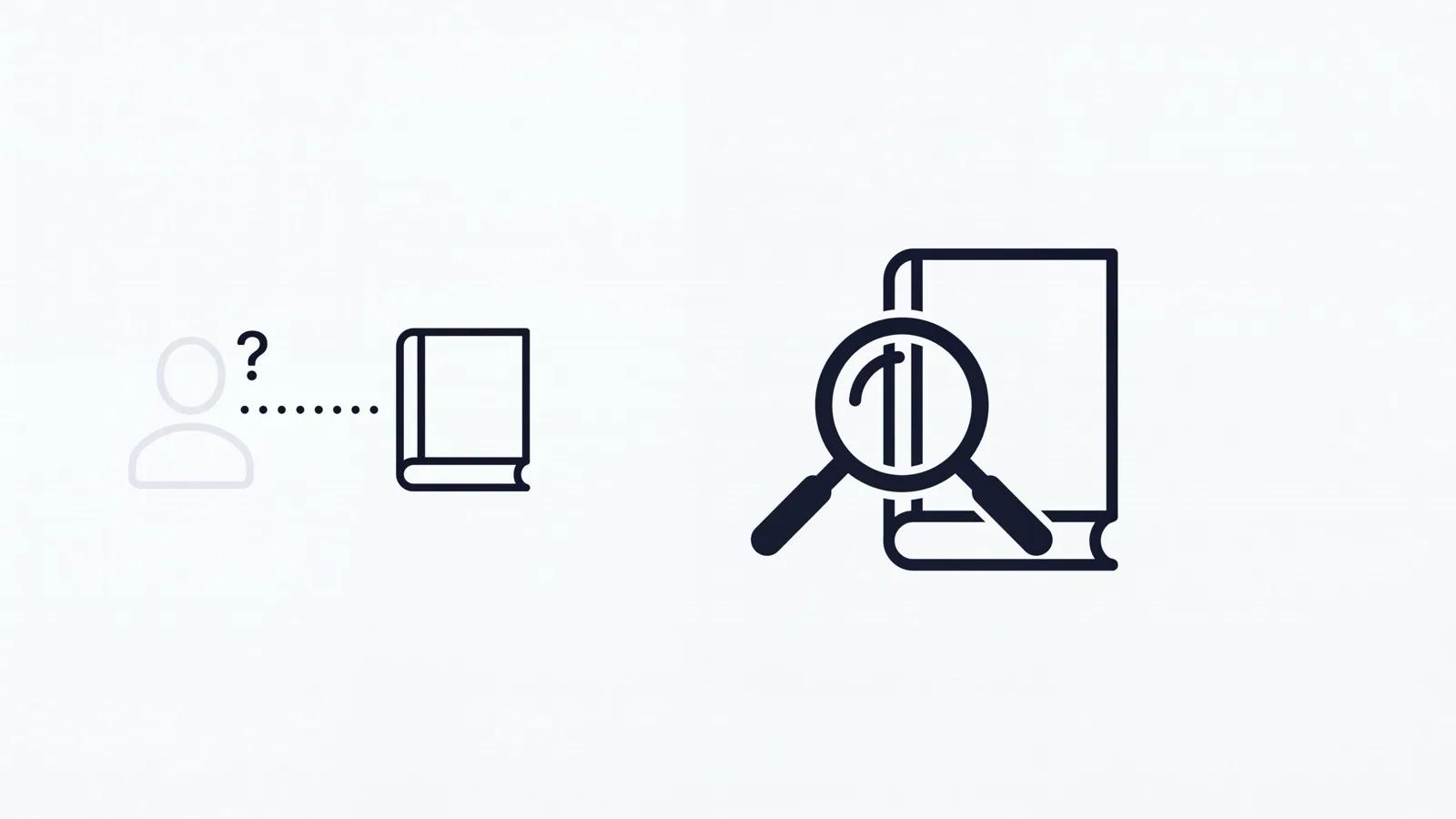
Self-service research search means a researcher finds prior art, a standard, or a journal article directly, across patents, journals, books, catalog entries, and abstracts, without walking to a library desk and waiting for a librarian to look it up.
The cost of mediated lookup
At many research and engineering organizations, patents, journals, books, and abstracts each live in a separate place, with no single searchable entry point. Finding prior art means asking the librarian, who searches whichever systems are available and reports back — a process that is slow by construction, because every search has a human bottleneck in the middle of it. The predictable side effects: prior-art work gets duplicated because nobody could confirm it had already been done, and scientific resources sit under-used because finding them takes more effort than the value of using them justifies.
The adoption shift already underway
This is not a hypothetical inefficiency — organizations are actively moving away from mediated lookup. Over 70% of large enterprises have already implemented at least one knowledge- management system (2025 enterprise-adoption survey), and 70% of organizations are expected to use AI-powered knowledge-management systems for streamlined information retrieval by the end of 2025 (2025 knowledge-management adoption survey). The market reflects the same shift: the global knowledge-management software market was valued at $23.2B in 2025, projected to grow at a 13.8% CAGR (2025 market analysis), while the AI-driven segment specifically is growing 47.2% year-over- year, reaching $7.71B in 2025 (2025 AI-knowledge-management market analysis).
What a self-service catalog covers
A research-knowledge platform consolidates the asset types that are normally scattered:
- Patent Fund — a searchable database of global patents, for prior-art reference.
- Journals — a database of journals relevant to the organization's research domain.
- Books — a catalog of domain-specific books held by the organization.
- Library Catalog — titles, publication dates, and authors of all held books, electronically indexed rather than tracked on cards.
- Library Users — a registry governing borrowing and access.
- Abstracts — a database of abstracts (autoreferats) from the organization's own research output.
Semantic search across all of these — patents, journals, books, catalog, and abstracts together — is what turns "check five separate systems" into one query.
Why linkage to project work matters as much as search
A knowledge base disconnected from active project work is a filing cabinet, however searchable. The higher-value version links catalog entries directly to the documents and standards a project is actually using — so a released technical document can point back to the standard or prior-art reference it relied on, and a researcher starting new work can find not just "does this patent exist" but "which of our current documents already reference it."
FAQ
Is this only useful for large research staffs? The self-service gain scales with search frequency, not headcount — even a small technical staff benefits once the alternative is "ask the one person who remembers where things are," which does not scale past that person's availability.
Does self-service search replace the librarian role? It removes the librarian as a mandatory bottleneck for every lookup, not the role itself — cataloging, acquisition, and access-list management remain functions someone owns; what changes is that day-to-day search no longer routes through them.
Sources
- 2025 enterprise knowledge-management adoption survey (70%+ large-enterprise KM implementation).
- 2025 knowledge-management adoption survey (AI-powered KM adoption forecast).
- 2025 knowledge-management software market analysis ($23.2B, 13.8% CAGR).
- 2025 AI-driven knowledge-management market analysis ($7.71B, 47.2% YoY growth).