Blog · C14
Bid/no-bid without a scorecard: what an ungoverned pursuit costs
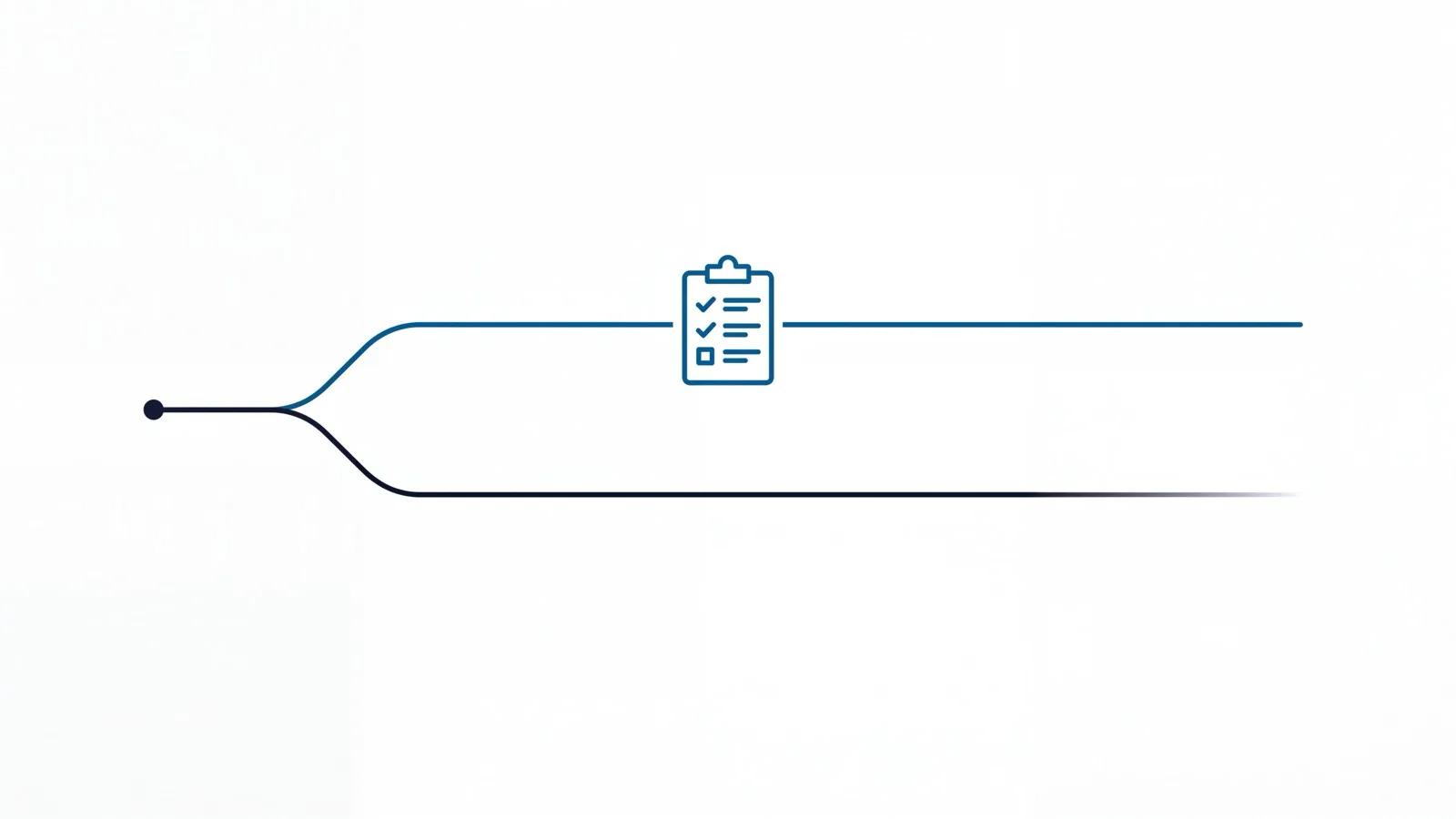
A bid/no-bid decision made informally — without a scorecard weighing technical competence, resource availability, experience, strategic fit, financial viability, schedule feasibility, and risk — has no record of why a pursuit was chosen, and no way to check later whether the choice was right.
The status quo: an unrecorded judgment call
Client requests arrive as emails and tender PDFs. Someone reads the tender, forms a view, and the organization commits (or doesn't) — often without writing down the reasoning. When the win rate disappoints six months later, there is nothing to audit: no record of which pursuits were selective, which were long shots, and which criterion actually predicted the outcome.
The scale of the problem is visible in the numbers. The commercial-construction industry average win rate is approximately 25% — one win for every four bids submitted (Beam AI, 2025). Hard competitive bids typically land 10–20%, while negotiated or selective pursuits reach 30–50% (iBeam / Constructionbids industry analysis, 2025). That spread is exactly what a bid/no-bid scorecard is supposed to widen in your favor: firms that combine selective bidding with stronger proposals consistently sit at the top of the range, 40–50% (4BT construction bid-data analysis, 2025). Without a scorecard, an organization cannot tell whether it is bidding selectively or just bidding often.
What a scorecard actually is
A bid/no-bid scorecard is not a gut-check turned into a form. It is a recorded decision, tied to a specific opportunity, scored against a fixed set of criteria:
- Technical competence for the scope in question
- Resource availability against current workload
- Track record / experience with the client or project type
- Strategic fit with the organization's target market
- Financial viability of the pursuit at the likely price point
- Schedule feasibility given the bid deadline and delivery timeline
- Risk profile of the client, contract terms, and site conditions
Each criterion gets a score, the scores combine into a decision, and the decision is recorded against the opportunity — not filed in an email thread that nobody reopens.
What changes with a routed pursuit register
e-CRM / e-Bid (Efixera's pre-contract module) registers every client request as an Opportunity the moment it arrives — classified by project type, number-generated, counted. Initial technical review (checklist, complexity, required disciplines, initial risk) feeds directly into the bid/no-bid scorecard, and the decision is recorded as a gated step (Gate O2) in the opportunity's history, not a hallway conversation.
This does two things a spreadsheet or an inbox cannot:
- It makes the decision auditable. Anyone can later see which criteria drove a bid/no-bid call and check it against the eventual outcome.
- It makes the pipeline countable. Every pursuit — bid or declined — sits in one register, classified and aged, instead of scattered across mailboxes with no aggregate view.
Why this matters beyond the individual decision
An organization that cannot see its pipeline (how many pursuits, what value, what conversion rate) cannot improve its bidding discipline — it can only guess. A recorded, scored bid/no-bid decision on every pursuit is what turns "we won some and lost some" into "our win rate on selectively-scored pursuits over $X is Y%, and here is why."
FAQ
Does a scorecard slow down the decision? No — it structures a decision that's being made anyway. The scoring criteria are the same factors an experienced bid manager already weighs informally; the scorecard just records the weighing instead of losing it.
What if we only bid on a handful of pursuits a year? The register and scorecard cost nothing to apply at low volume, and the payoff compounds — a small number of well-scored decisions still produces a track record you can learn from, which a handful of unrecorded gut calls does not.
Sources
- Beam AI, "How Construction Bid Win Rates Are Measured?", 2025.
- iBeam / Constructionbids industry win-rate analysis, 2025.
- 4BT (Efficient Construction Project Delivery), construction bid-data analysis across 1,000+ projects, 2025.