Blog · Commercial (buyer guide)
Adopting Efixera module by module: a phased rollout plan
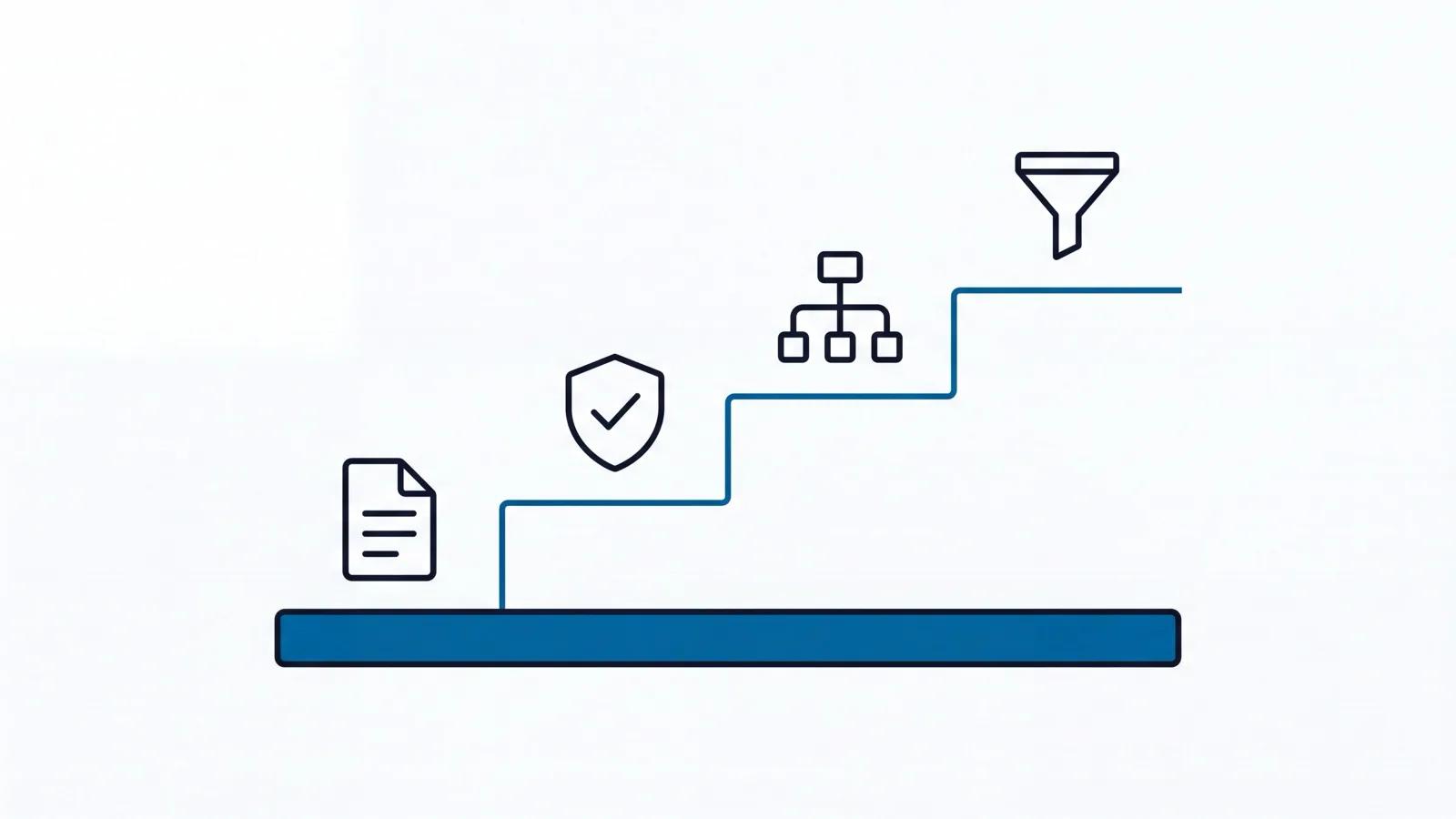
Adopting Efixera module by module means picking one audit pain — document control, quality, lab, HR, or bid management — proving value on that module alone, then adding the next one on the same login and access model, without committing to a multi-year integration program up front.
Why phased beats big-bang for this kind of platform
Digital transformation projects succeed only 35% of the time globally, across a study of more than 850 companies (BCG, 2025). Where organizations moved to a staged rollout instead of a single cutover, results moved the other way: a 17% increase in customer satisfaction and a 20% improvement in operational efficiency (Zendesk 2025 CX Trends report). The risk in a single-cutover implementation is concentrated in one go-live date; a phased rollout spreads it across several smaller, individually reversible steps.
The mechanism that makes phasing possible here
Each Efixera module — e-EDMS (document control), e-QMS (quality/compliance), e-Lab
(laboratory/metrology), e-HR (people/competency), e-Library (knowledge), e-PMS (capital projects),
e-CRM/e-Bid (pre-contract) — stands alone and gains additional value as adjacent modules are added,
because every module shares one login, one access model, and one audit trail (Efixera Core). There
is no per-module integration project to run separately; the platform is a single-tenant dedicated
install per organization (see /trust), so adding a module is a configuration change, not a new
system to stand up.
A representative sequencing logic
- Start with the loudest audit pain. If the recurring finding is "we can't produce a current version of this document on demand," start with e-EDMS. If it's "our calibration evidence is scattered," start with e-Lab.
- Prove the module alone. The first live module already shows enforced current versions, color-coded standard/calibration validity, or routed approvals — value visible without a second module attached.
- Add the second module where the audit pain repeats. Quality and lab pains frequently share the same evidentiary gap (audit-ready documentation), which is why e-QMS and e-Lab are a common second step after e-EDMS.
- Let the cross-module effect compound. Competency evidence recorded once in e-HR becomes visible to e-QMS's role-competence checks and e-EDMS (PMS)'s project-staffing view without re-entry, once both are live.
What this does not require
No consultant-led, multi-year integration program, and no commitment to license every module on day one. Each module is priced and adopted independently; the platform-wide effect compounds as more modules go live, but it is not a prerequisite for getting value from the first one.
Sources
- Digital transformation 35% global success rate across 850+ companies — BCG, 2025.
- Phased rollout: 17% CSAT increase, 20% efficiency improvement — Zendesk 2025 CX Trends report.
- Single-tenant/Install Profile deployment model:
01_Business_Core/decision_log.mdD-004;05_Dev_Specs/deployment_model.md. - Module-by-module adoption and cross-module effect:
03_Marketing_Engine/objection_library.md#7/#8;01_Business_Core/business_dna.md§2.6.